



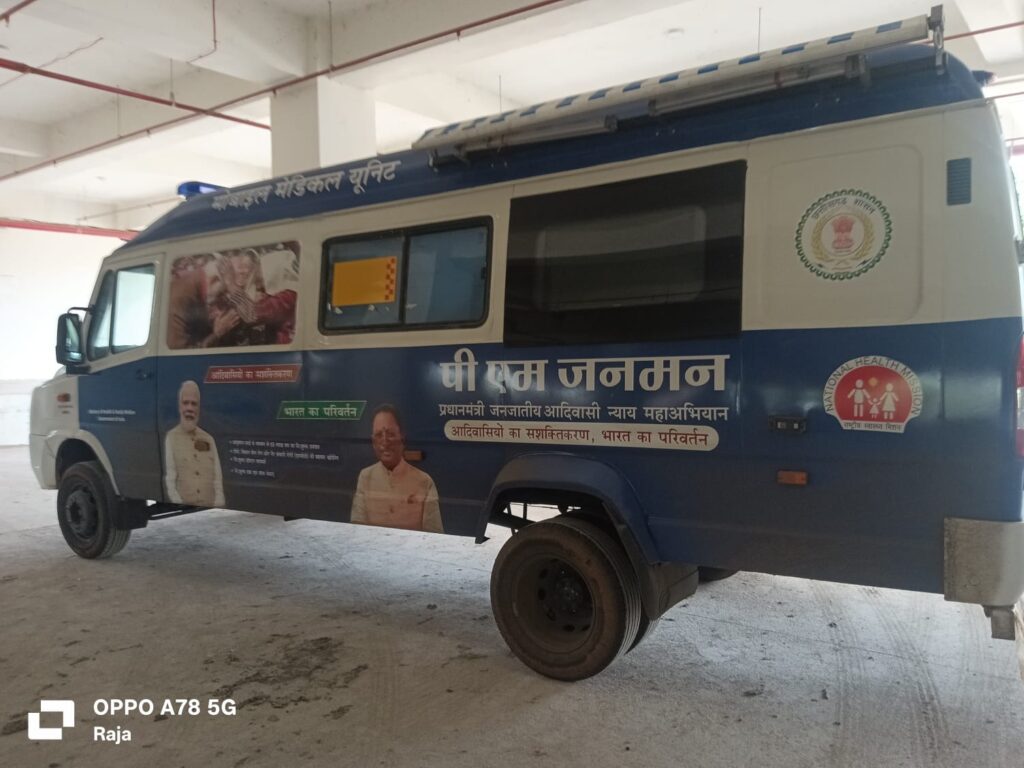
Raipur. Under the Pradhan Mantri Janman (Janajati Adivasi Nyaya Maha Abhiyan), the Mobile Medical Unit (MMU) initiative is being launched in Chhattisgarh to strengthen healthcare delivery in Particularly Vulnerable Tribal Group (PVTG) areas. This targeted intervention aims to provide accessible and quality healthcare to the most remote tribal habitations of the state.
The programme is being rolled out across 18 PVTG districts of Chhattisgarh — Kanker, Kondagaon, Narayanpur, Korba, Jashpur, Surguja, Balrampur, Gaurela-Pendra-Marwahi, Raigarh, Dhamtari, Mahasamund, Baloda Bazar, Kabirdham, Khairagarh-Chhuikhadan-Gandai, Gariaband, Mungeli, Bilaspur, and Manendragarh-Chirmiri-Bharatpur.
Each MMU will include an MBBS doctor, lab technician, trained ANM nurse, and access to specialist consultation through telemedicine. The units will conduct daily health camps, offering free consultations, diagnostic tests, and essential medicines.

The initiative focuses on addressing key health challenges faced by PVTG communities — including maternal and child health issues, infectious diseases such as tuberculosis, malaria, and leprosy, as well as rising cases of non-communicable diseases like diabetes and hypertension. It also emphasizes vaccination coverage improvement and awareness on seasonal diseases such as dengue, malaria, and chikungunya.
The MMU services will be operated by Dhanush Healthcare Systems Pvt. Ltd., an organization with extensive experience in delivering primary healthcare in tribal and remote regions across India and other developing economies. Dhanush has previously partnered with Government of India, WHO, UNDP, and UNICEF for similar projects.
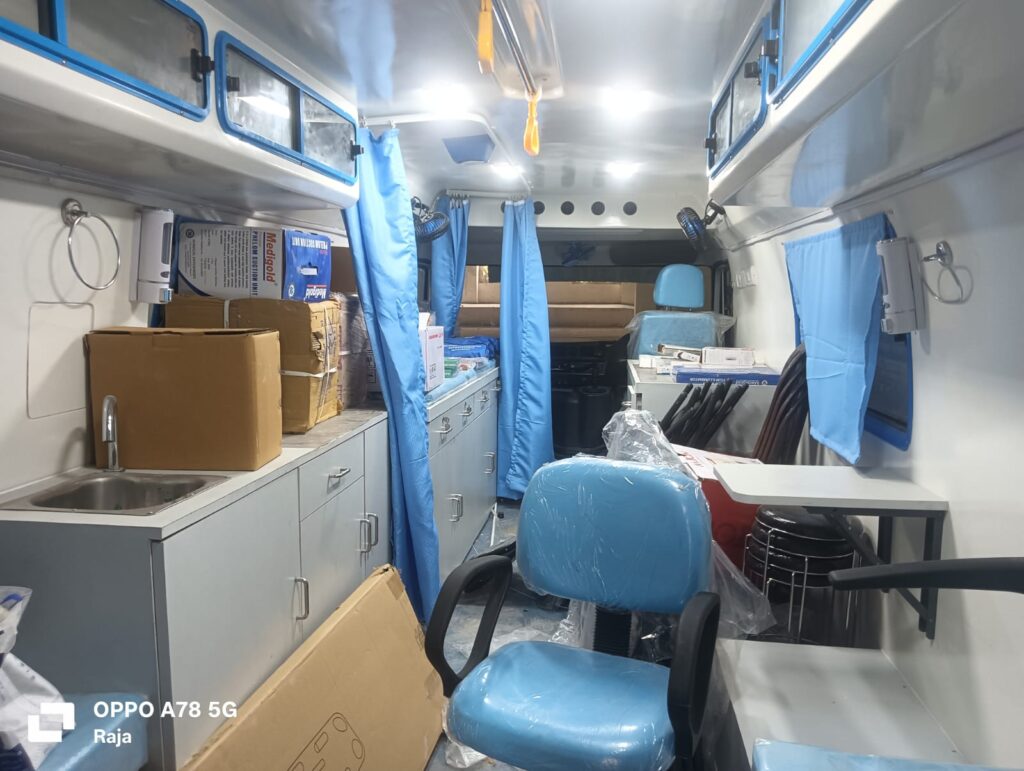
For Chhattisgarh, the Force Motors T2-4020 model has been selected as the MMU vehicle after rigorous technical evaluation. Built with Monocoque technology, these vehicles ensure enhanced safety, durability, and performance, even in challenging terrains.
With the operationalization of the PM Janman MMU services, Chhattisgarh is set to witness significant improvements in maternal and child health indicators, reduction in IMR and MMR, and a major step towards ensuring equitable access to quality healthcare for its tribal population.